
The Psychology of High-Performance Leadership
“Leadership psychology for building high-performing teams.”

Why organisations need this course
In today's workplace, supervisors and executives face challenges that are not only about the work but also about “managing people”, which grows more complex every day. With a fast-changing world of work, team members of many ages and attitudes, and pressure from targets and limited resources, a supervisor's role today is not just to “command and control” but to be a “leader who truly understands people”.
In an era when teams want meaning more than salary, trust more than orders and a safe space more than perfection, the “Psychology of Leadership” has become the most important skill for every supervisor. This course is built on contemporary psychology, including Self-Leadership, Empathic Listening, Trust Building, Team Psychological Safety, and an understanding of work, diversity and uncertainty, the realities of today's teams.
Participants understand themselves as supervisors, see the behaviours that build or damage relationships, learn to listen, communicate and respond to the team with understanding grounded in psychology, and gain practical tools to shift from a “technical boss” to a true “leader of hearts”, in an era when results come from trust, not just orders.
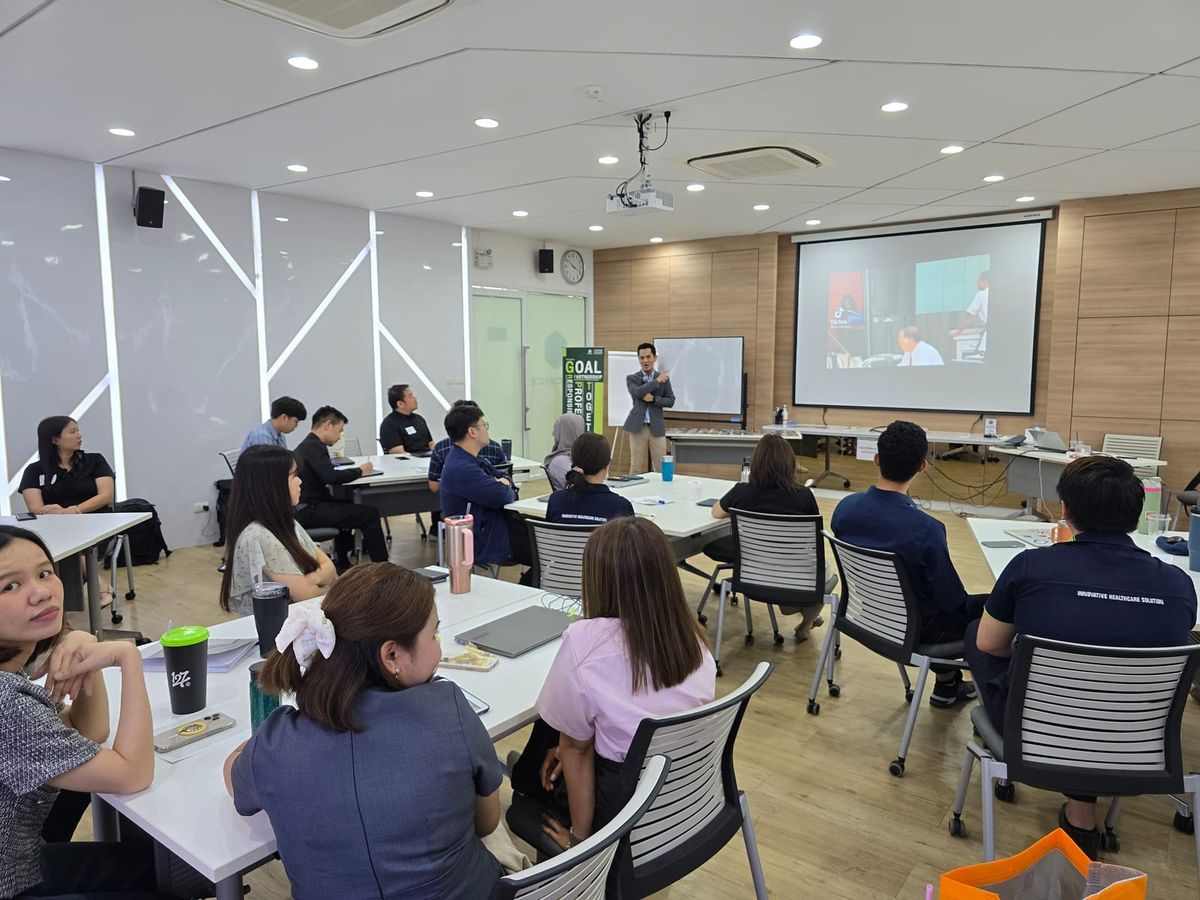
What participants will gain
Outcomes participants can apply at work straight away
- Participants gain a deep understanding of the Psychology of Leadership and can use it to create a work atmosphere where the team dares to speak, think and take shared responsibility
- Participants learn ways to build engagement at work and achieve results through psychological approaches
- Participants can apply Psychological Safety and Self-Motivation to sustainably raise both work results (Productivity) and a positive team atmosphere (Positivity)
Executives, supervisors and people preparing to lead teams at various levels
Course outline
1-day training · 09:00 – 16:30
- To get the most from the learning, participants complete Pre-work before the training, reflecting on their own real situations, which are used as Cases throughout the programme
- What has been the most challenging situation in managing your team over the past 3 months?
- How does that situation relate to “KPI vs People”?
- What have you done so far, and what were the results?
Participants understand why leaders who are strong on Productivity may still be unable to build a sustainable team if they lack an understanding of leadership psychology, especially in organisations under intense pressure on KPIs and business results. This Module focuses on the “systemic tension” between Productivity (work results) and Positivity (team atmosphere and morale), which leaders must manage together rather than choose one over the other, to build a team that is both high-performing and sustainable.
- The meaning and role of the Psychology of Leadership in real work
- Balancing Productivity vs Positivity under KPI pressure
- How team results connect with the work atmosphere
- Levels of interdependence at work: Coordination → Cooperation → Collaboration
- Case-based Learning Case studies of “the team that hit its numbers but lost its people” vs “the team with a great atmosphere but falling results”, reflecting real situations
This Module presents Self-Determination Theory (SDT), made up of 3 key factors: Autonomy, Competence and Relatedness, with a focus on applying it in real contexts with constraints from Policy, Compliance and central targets. Participants learn to build motivation from “the space they can really control” (Autonomy within Constraints), so the team feels valued and driven from within.
- Self-Determination Theory (Autonomy, Competence, Relatedness) and how to apply it in organisations
- Designing work and goals to fit the situation and its constraints
- Building motivation from the space you can really control (Autonomy within Constraints)
- Practical Framework — Focus your Goal: connect work goals (KPIs) with meaning at work
- Find your Potential: make the most of the resources in the team
- Try your Best: create space to experiment with the right approach
- Manage your Self: manage your energy and stay consistent at work
This Module focuses on the leader's role in building the team through the 3E Model: Embrace, Empathy and Empower, applied according to each “participant's role”, since roles differ. Participants understand that psychological leadership is not a generic concept but must be adapted to their own role and responsibilities.
- The difference between strategic and operational leadership roles
- Building Psychological Safety so the team dares to think, speak and act
- Embrace: embracing differences and mistakes
- Empathy: deep listening to both reasons and feelings
- Empower with Respect: delegating authority with respect
- Empowering at each level of the chain of command
- Workshop Role-based Scenario Simulation: split into groups by role, analyse real situations such as “the team is missing its target”, and design how to use the 3E Model to fit each role
The final Module focuses on putting all the learning into practice. Participants learn how to build a High-Performance Team together with Psychological Safety, and design an Action Plan they can apply in their own context.
- 7 components of an effective team under Psychological Safety
- Assessing the team's level of Psychological Safety
- Linking Psychological Safety with Team Performance
- Action-Oriented Learning & Workshop Designing an Action Plan that fits your own work context
- Setting Behavior-based Indicators
- Building an Accountability Mechanism to create change at work
- Peer Feedback & Commitment to follow up after the training
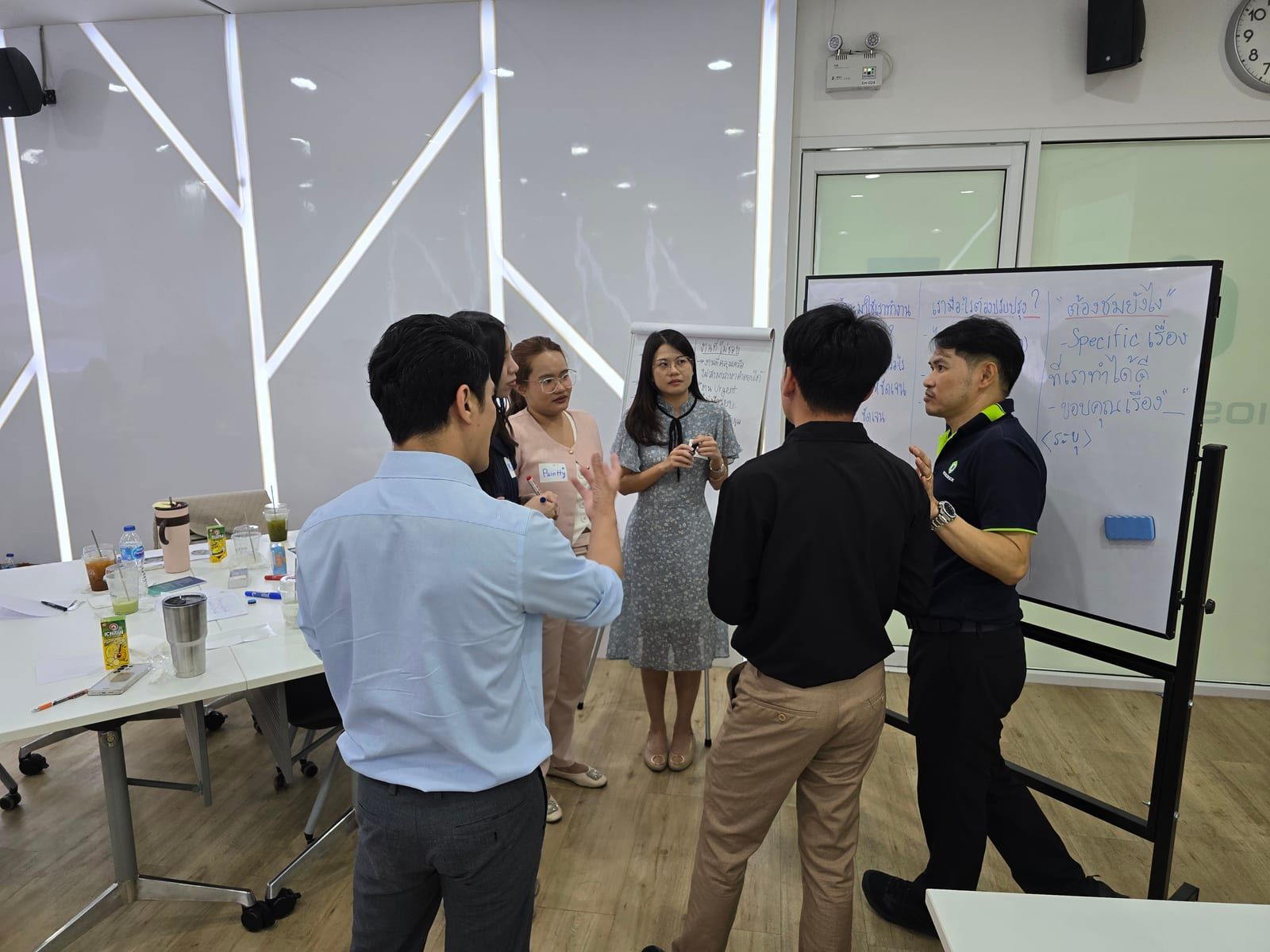
Signature Method: our proprietary training process
Over 10 years we have developed a distinctive training process that engages participants and creates real change, producing measurable results. It is recognised by more than 500 leading private and public companies in Thailand. Our proprietary PBF Method consists of:
Positive Psychology
Uses positive psychology to raise Awareness and the desire to change, and nurtures a New Mindset so that new behaviours emerge on their own.
Brain Based Learning
Uses brain science to design learning content with Models, Frameworks and Storytelling, making it memorable, easy to understand and practical.
Facilitation
Uses participatory learning with Gamification, AI Tools and Workshops, so participants form their own insights and act on them through a Call to Action, producing measurable results.
- Skill Set 70%
Skills practice through Gamification, AI Tools and Workshops
- Mindset 20%
Shifting perspectives and nurturing new attitudes through insights formed with the group
- Knowledge 10%
Understanding the knowledge content: Theory, Model, Framework, Storytelling
Course trainer

Dr. Bat Athitkorn Niyomdechateerachat
- Education and certifications
- PhD in Development Education, Srinakharinwirot University
- Master's degree in Industrial and Organisational Psychology, Faculty of Liberal Arts, Thammasat University
- Bachelor's degree in Psychology and Guidance, Faculty of Education, Prince of Songkla University
- Professional Action Learning Certified Coach
- Points of You Expert
- Work experience
- Leadership Program Director, Learning Hub (Thailand) Co., Ltd.
- Guest lecturer, Khon Kaen University and Srinakharinwirot University
- Managing Director, Code of Success Co., Ltd. and The Triple C Co., Ltd.
- Former Human Resource Development Manager, Outlet Mall Co., Ltd. (Pena Group)
- Experience in project management, creative work and education development, connecting people development with the work context and organisational goals